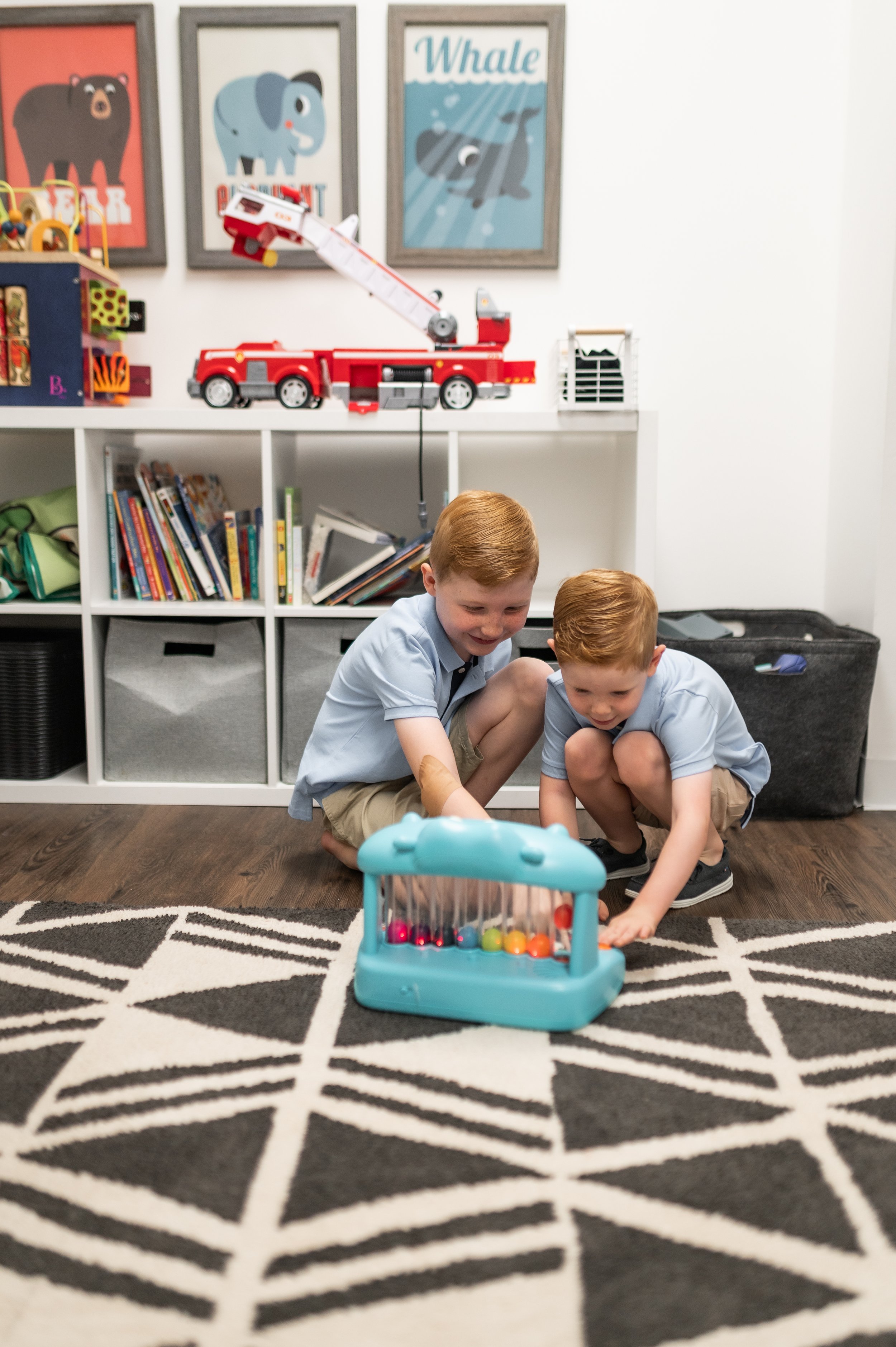
Your child is struggling to learn.
Here’s what no one’s told you yet.
learning & reading
Reading, listening, focus, and memory aren't just academic skills. They're the result of how efficiently the brain integrates sensory input — and that starts before you even open a textbook.
VIDEO TESTIMONIALS
Families like yours. Stories like theirs.
Whitney, Child Testimony, Dyslexia
Megan, Mother of Child with Learning Breakthrough
Learning happens in the brain. So does the struggle.
UNDERSTANDING THE ROOT
When the brainstem and lower processing centers aren't organizing information efficiently, higher-level tasks like reading comprehension, decoding, attention, and memory become far harder — not because a child lacks ability, but because the foundational systems haven't been properly supported.
Auditory Processing
What if they're not tuning you out — their brain just can't filter fast enough?
Tap to learn more
Auditory Processing
Difficulty following multi-step instructions, missing sounds in words, or losing track of what was just said — even when they're paying attention.
Visual Processing
What if the words on the page are actually moving?
Tap to learn more
Visual Processing
Letters reversing, losing their place while reading, or difficulty tracking words across a line — not carelessness, a processing challenge.
Memory & Recall
What if they understood it in class — and it just didn't stick?
Tap to learn more
Memory & Recall
Reading a passage but struggling to retain what it said moments later — or forgetting learned material overnight.
classroom attention

What if staying focused takes everything they have — and there's nothing left for learning?
Tap to learn more
classroom attention
Easily distracted, difficulty sustaining focus on tasks, or seeming "checked out" even when trying.
Sound-to-Symbol

What if sounding out words never gets easier — no matter how much they practice?
Tap to learn more
Sound-to-Symbol
Sounding out words laboriously, poor phonemic awareness, or inconsistent decoding from day to day.
Reading Fluency

What if every page feels like an uphill climb — and reading is exhausting in a way they just can't explain?
Tap to learn more
Reading Fluency
Reading is slow, choppy, or effortful — leaving little mental energy for comprehension.
These aren't separate problems. They share a common source.
common source
The brain's ability to learn depends on how well its sensory systems — auditory, visual, and vestibular — communicate and integrate with each other. When that integration is inefficient, the downstream effects show up in school as learning challenges.
Sensory integration issues often precede and drive learning difficulties
The brainstem processes sensory input before the cortex ever sees it
Teaching strategies help — but can't fix what's happening upstream
Supporting lower brain systems creates a foundation for learning to become easier
What most approaches to dyslexia miss…
A DIFFERENT WAY FORWARD
Traditional reading interventions focus on teaching around the difficulty. BrainVive works on the layer where the difficulty is being created.
Traditional Approaches
Teaching around the challenge
- Phonics programs and repetition-based reading
- Tutoring to build decoding skills
- Accommodations like extended time or audio books
- Progress may be slow, and gains may not stick
- Reading remains effortful even with consistent work
BrainVive Approach
Supporting the brain where it organizes input
- Multi-sensory integration targeting auditory, visual & vestibular systems
- Works at the brainstem level — where sensory input is organized
- 30-day drug-free neuro rehab protocol
- Learning becomes more natural as the brain integrates more efficiently
- Supports retention so that gains build and carry forward
How we support
learning at the source.
The neurorehab protocol™
Comprehensive Evaluation
We assess three dominant sensory systems to identify exactly where misfiring is happening. This is the step nobody else does — and why everything else has felt like guesswork. Your evaluation is the roadmap for everything that follows.
In-Office · First Step12-Day In-Office Retraining
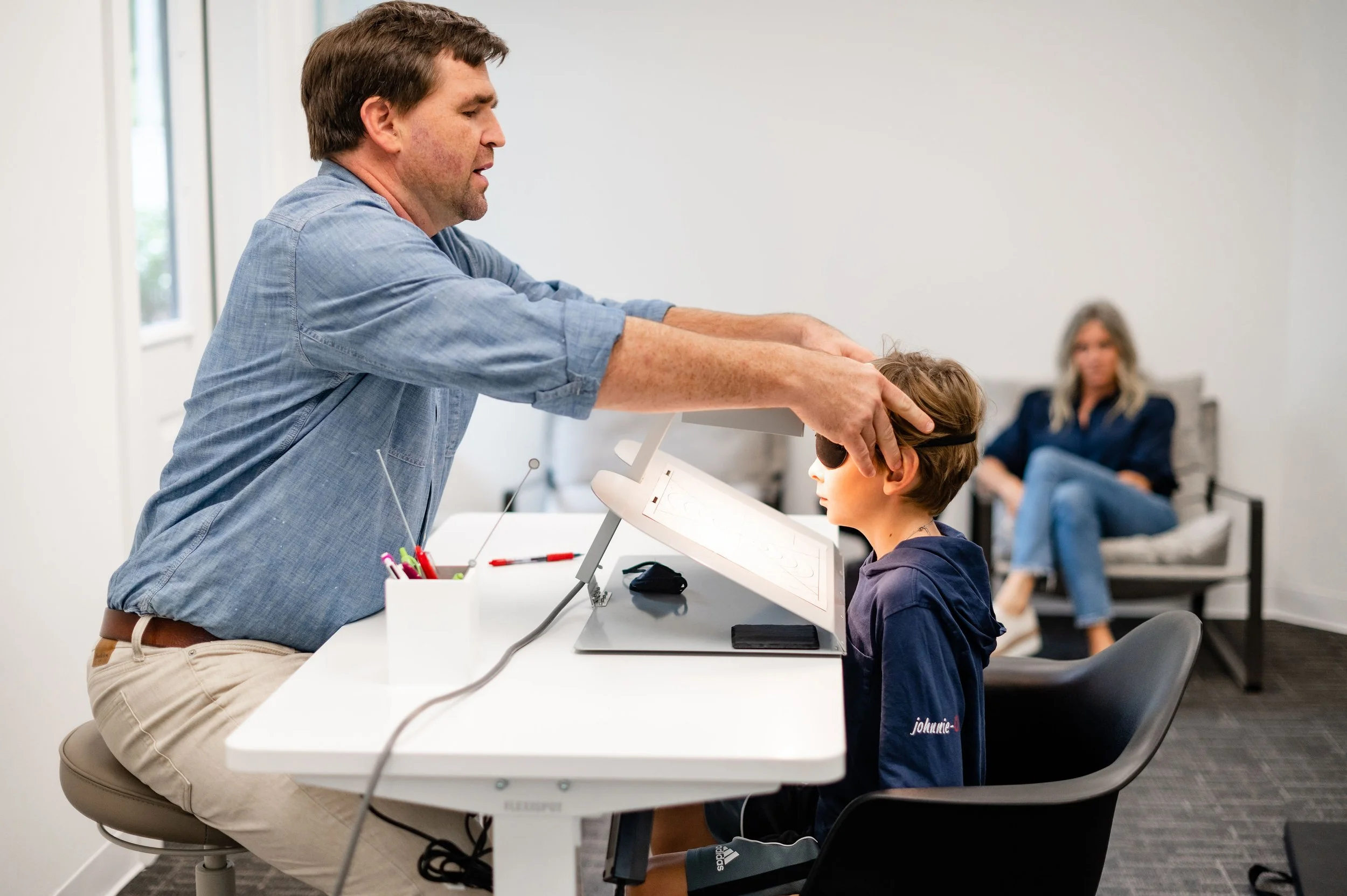
Working directly with your BrainVive specialist, we begin retraining the specific systems identified in your evaluation with our specialized equipment. Targeted, measurable, and personalized to your brain.
In-Office · Days 1–1218-Day Home Program
Take a simple portion of the protocol home to continue sensory stimulation. Our team is available to answer any questions. At the 30-day mark the stimulation is complete and it's time to allow neural pathways to mature.
At Home · Days 13–30This is the part no one else does.
And it's why the results are different.
What families report after the protocol
Report improvement in focus, attention, and distractibility
Report an increase in reading fluency
Report an increase in auditory processing
Report a decrease in impulsivity