
Whether life feels unmanageable or just slightly off — the answer is the same.
Your nervous system needs support.
for adults
These symptoms may run your life — but they don’t have to.
do any of these sound familiar?

Brain Fog
That persistent mental cloudiness — where thinking feels slow, words don't come easily, and you can't seem to get traction no matter how much sleep you get. Often rooted in sensory processing overload rather than fatigue.
Anxiety
When the nervous system is constantly misreading input as threat, anxiety becomes the baseline. BrainVive works on the regulatory systems driving that response — not just the thoughts on top of it.
Anger, Mood Swings
Mood swings, overreactions, or the feeling that your emotions are running you. When the brain's sensory foundation is unstable, emotional regulation takes a back seat.
PTSD
Trauma lives in the nervous system long after the event has passed. BrainVive works from the bottom up — addressing the sensory systems keeping the body in survival mode.
Concussion Recovery
Lingering brain fog, light sensitivity, mood changes, and fatigue after a concussion are signs the brain's sensory systems weren't fully restored. BrainVive rebuilds them methodically.
Migraines & Vertigo
Often connected to vestibular and visual system dysregulation. When those systems are misfiring, the brain works overtime to compensate — and migraines and vertigo can be the result.
Processing Challenges
Difficulty keeping up in conversation, needing information repeated, or feeling like your brain is always one step behind. These are often signs of auditory or visual processing gaps.
Overwhelm
When everyday demands feel disproportionately exhausting, it's often because your brain is using extra resources just to process its environment — leaving less capacity for everything else.
Performance Plateau
You've put in the work but stopped improving. Whether in business, athletics, or creative output — a misfiring sensory system can quietly cap what you're able to achieve.
Burnout
True burnout often has a neurological component. When the brain has been compensating for dysregulated systems for years, exhaustion isn't just emotional — it's structural.

People who were exactly where you are right now.
testimonies from adults like you
"I felt an immediate change in my body..."
"Brainvive is the best program for a sharper mind."
"I would recommend Brainvive to anyone!"
"BrainVive has given me hope, confidence, and a renewed sense of possibility, and for that I am truly thankful."
I came to BrainVive looking for relief from several neurological challenges. I was struggling with focus, balance, depth perception, and walking, but most of all, reading. I hadn't fully realized how much these difficulties were impacting my life until I found myself struggling with everyday tasks and falling behind in areas that mattered to me.
Learning new things and trying new experiences had become overwhelming. The anxiety and mental exhaustion of having to work so hard to process information made it difficult to enjoy life the way I once had.
Since completing the program, I have seen tremendous improvements. My balance is much better, I run into doorways less often, and I notice that I drop things far less frequently.
I am excited and hopeful as these new neural pathways continue to develop and strengthen. The staff was incredibly welcoming, compassionate, and understanding. I genuinely looked forward to seeing them each day, and their support made all the difference in my journey.
BrainVive has given me hope, confidence, and a renewed sense of possibility, and for that I am truly thankful.
— Leah, 38 · Atlanta, GA

This is what thirty days can do.
the NeuroRehab Protocol™
Comprehensive Evaluation
We assess your visual, auditory, and vestibular systems to identify exactly where the misfiring is happening. You'll leave knowing more about your own brain and with a clear roadmap for what comes next.
We start by finding exactly which systems are misfiring and why. Then we retrain them — first with us, then at home. That's it.
12-Day In-Office Retraining
Working directly with your BrainVive specialist, we retrain the specific systems identified in your evaluation. Twelve consecutive days, fully targeted to your brain — not a generic protocol. Every session is building on the last.
18-Day Home Program
You take the protocol home. Structured daily exercises designed to fit into a busy schedule — under 30 minutes a day. We check in, track progress, and adjust. At day 30 we reassess — and you'll see exactly what changed.
We know twelve days is a significant investment for any adult. We also know what's waiting for you on the other side of it.
Three systems run everything.
Most treatments never touch them.
the root cause
When this system is misfiring, your brain burns through energy just making sense of what's in front of you — leaving less for focus, retention, and clear thinking.
Visual System
When this system is dysregulated, your brain can't filter signal from noise — making busy environments exhausting and slowing down how you process information.
Auditory System
When this system is off, your nervous system never fully settles. That low-level hum of anxiety, the feeling of being constantly on edge — this is often where it starts.
Vestibular System
This has nothing to do with how well you see, hear, or how coordinated you are. It's about whether your brain is processing those signals efficiently — and whether all three systems are working together.
testimonials
“From mental health to optimization… BrainVive helps every aspect of your day to day life.”

Most adults have spent years unconsciously compensating — pushing through the fog, trying to manage the anxiety, white-knuckling their way through the afternoon crash.
BrainVive identifies exactly which sensory systems are misfiring and retrains them directly. Thirty days. No medication. No guesswork.
you're not imagining it
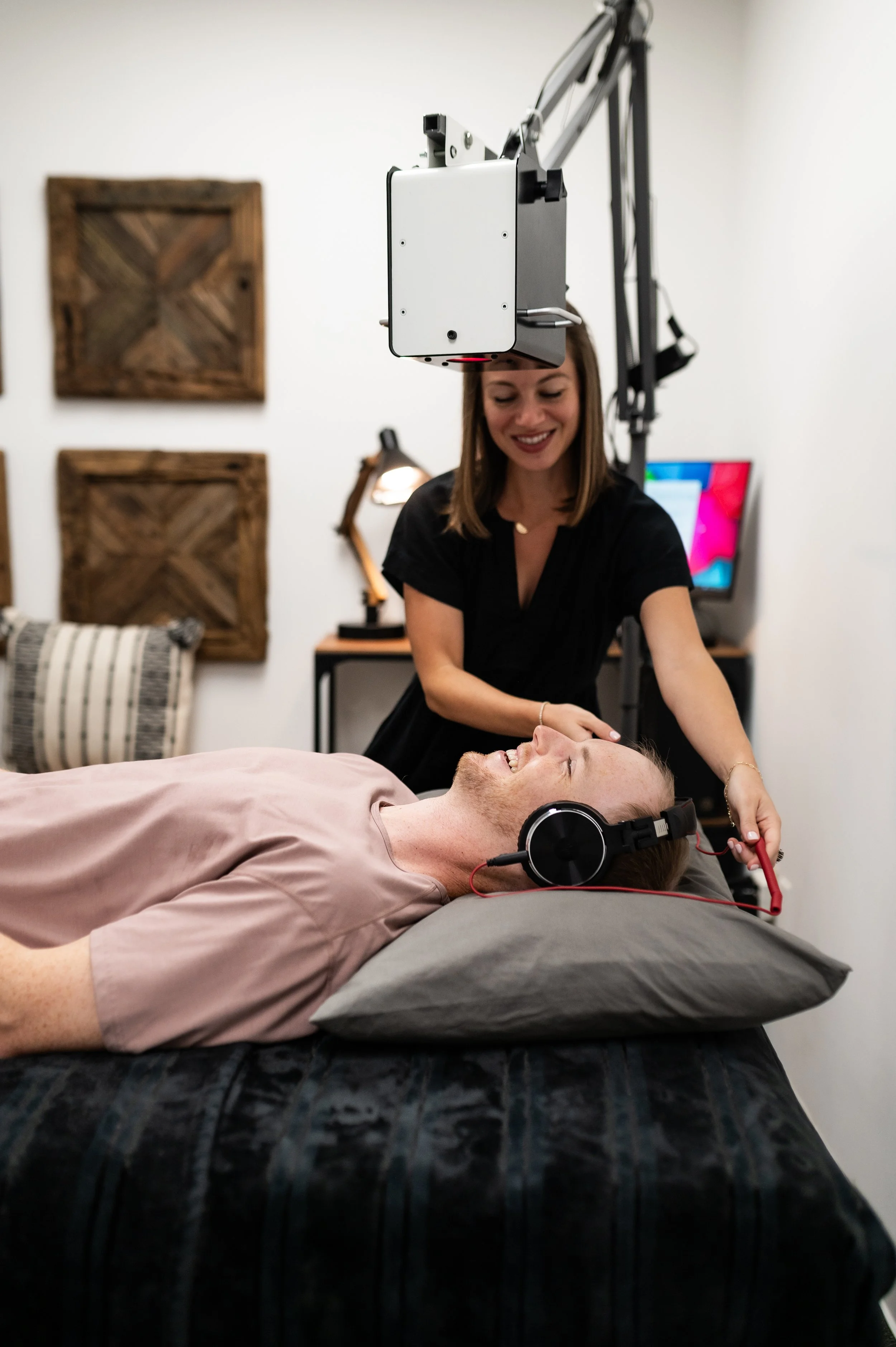
What does a session actually look like?
Simple. You lay on your back in a relaxing, darkened room with light, sound, and motion. That's it. There's nothing painful, strenuous, or intimidating about it.
How long are the appointments?
Adult sessions are 60 minutes — in and out, once a day.
What does the home program involve?
The at-home portion is two 20 minutes a day using an easy light training box. Designed to fit into any schedule with no prior experience needed.
Is this painful or uncomfortable?
No. The program is non-invasive and drug-free. Some people may feel a little more tired as their brain adapts — that's normal. During the first few days especially, you may find it harder to stay awake during the sessions or feel ready for bed earlier than usual. We recommend prioritizing good rest throughout the program.
Do I need a diagnosis to start?
No. Many of our adult clients have never been diagnosed with anything — they just know something feels off. If you've struggled with focus, anxiety, sleep, or feeling overwhelmed for years without a clear answer, that's enough to start.
Can I do this while on medication?
Yes. BrainVive is drug-free and works alongside any current treatment plan. We're not asking you to stop anything — we're addressing what those treatments don't reach.
Will I have to repeat the program?
Most people do not. The majority of clients complete one 30-day program and maintain their gains. Some choose to return after 10–12 months or later for deeper regulation and additional progress — but it's not required.
How soon will I notice a difference?
It varies and is specific to each person. Some individuals notice shifts during the 12 in-office days. Others experience a more gradual response — which is completely normal. Healthy neurological development works this way: new pathways are created through stimulation, and those pathways take time to mature. We recommend not judging results for a minimum of 90 days.
What is "retracing" and is it normal?
Some individuals experience a phenomenon called retracing — where areas being stimulated are still developing, and there's a temporary heightening of certain symptoms or sensory experiences before things settle. This is a known part of the neurological reorganization process and is not a cause for concern.
Is this therapy? Do I need to stop seeing my therapist or doctor?
No — and no. BrainVive is not therapy, it's training. Think of it as addressing the hardware while your other providers work on the software. We work alongside your existing team, not instead of them.
What if I've already tried everything?
That's actually who this is designed for. If you've done the therapy, tried the medication, read the books, and still don't feel like yourself — the sensory systems are often the missing piece no one looked at.
Is this covered by insurance?
Currently BrainVive operates outside of insurance. We're happy to provide documentation for potential HSA/FSA reimbursement.
You have questions?
We definitely have answers.
GOOD QUESTIONS
You’ve done the therapy.
You’ve tried the medication.
Your brain still isn’t working the way you know it can.
BrainVive's 30-Day NeuroRehab Protocol™ retrains the sensory systems driving those patterns — without medication, without guesswork.