BrainVive supports children and adults on the spectrum.
Autism & Apraxia
Children and adults with autism have documented sensory processing differences. BrainVive's NeuroRehab Protocol™ works directly at the source — retraining the sensory systems that make everything else harder than it needs to be.
BrainVive's NeuroRehab Protocol™ works directly at the source — retraining the sensory systems that make everything else harder than it needs to be.
The meltdowns. The shutdowns.
The exhaustion of not knowing why.
This might sound like your house...
If any of these sound familiar, you’re in the right place.
- "He covers his ears every time there's background noise — even the TV."
- "She can't sit still long enough to get through a therapy session."
- "He understands so much more than he can communicate."
- "She shuts down completely when the environment is too much."
- "We've tried everything. He works so hard — and it's still so hard."
- "She knows what she wants to say. She just can't get it out."
BrainVive addresses the sensory processing challenge at the root of autism symptoms.
What the research shows
Research consistently shows that children and adults with autism have significant differences in how their brains process sensory information. The visual, auditory, and vestibular systems (the three dominant channels through which the brain receives input) are often dysregulated in people on the spectrum.
When those systems aren't communicating efficiently, everything built on top of them, language, behavior, focus, regulation, becomes harder. Not because of who they are, but because of what their brain hasn't had the chance to learn yet.
That’s where BrainVive starts.
in his own words
Walker’s Story
Walker’s testimony of his experience at BrainVive blew us away and left us in tears. What's possible for Walker is possible for any family that walks through our doors.

how brainvive works
When your child's nervous system feels safe, learning, development, and communication, get easier.
01
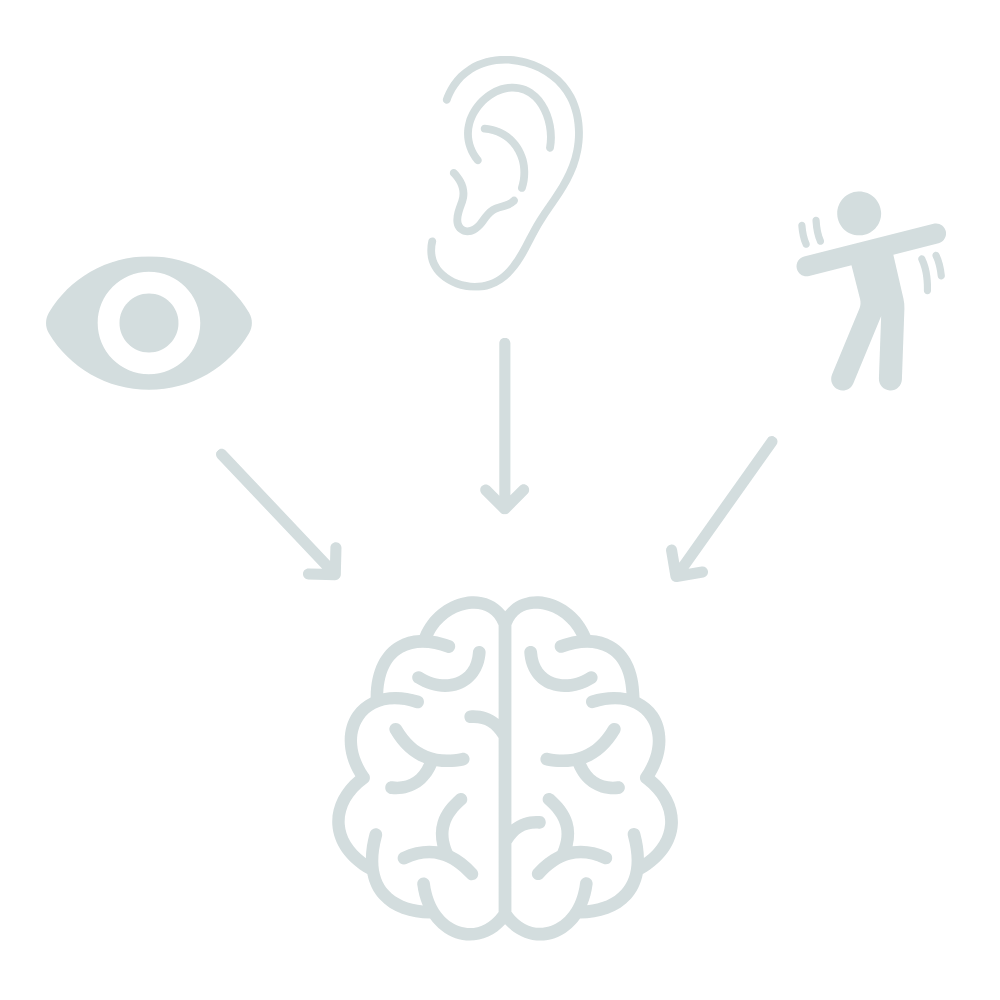
Sensory input enters through three dominant systems
Everything you experience — what you see, hear, and feel in your body — enters the brain through the visual, auditory, and vestibular systems. For people with autism, these systems are often dysregulated from the start.
02
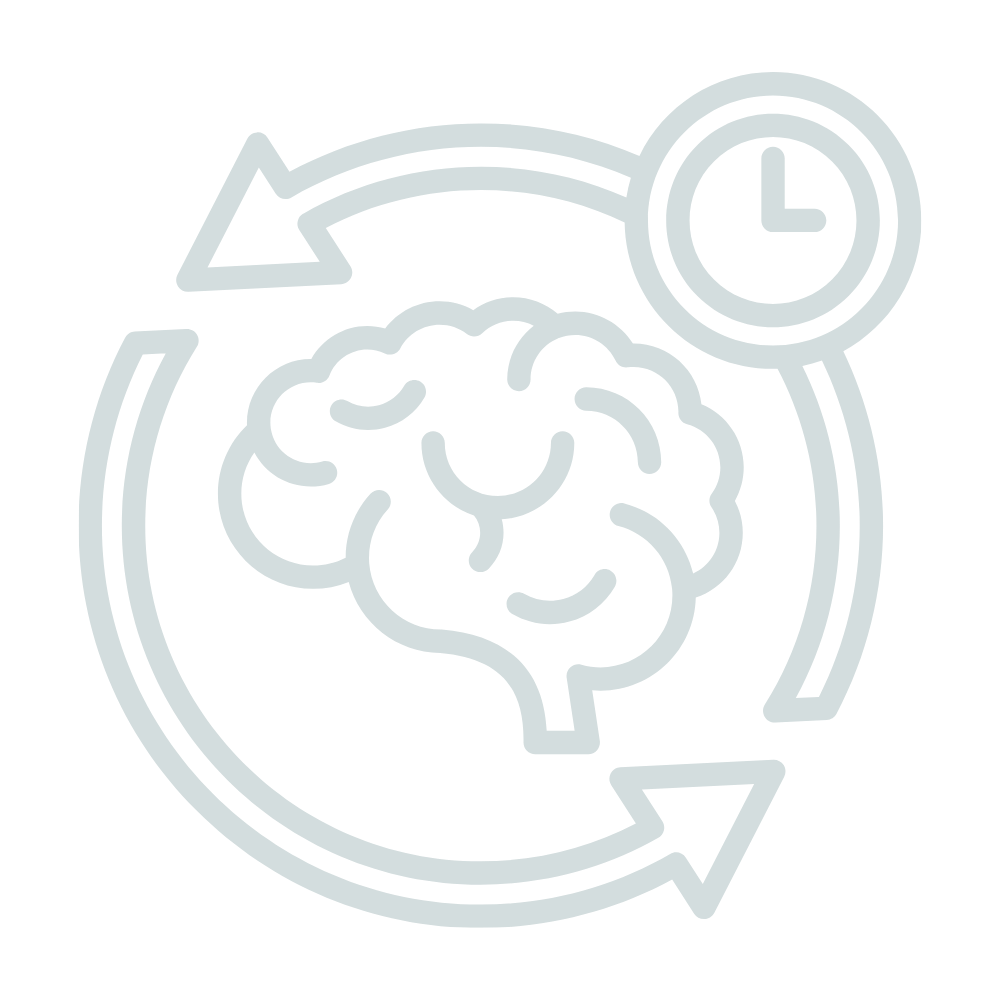
The brainstem has to integrate all of it
Before behavior, language, or learning can happen, the brain must organize and integrate that sensory input at the brainstem level. When that integration is inefficient, everything downstream is harder — regulation, communication, focus, connection.
03
Retraining the source changes everything
When the brain learns to process sensory input more efficiently, the downstream effects follow naturally. Not because we taught the behavior — but because we addressed the foundation that makes behavior possible.
a different kind of therapy
Most therapies ask something
of your child. BrainVive doesn't.
For many children and adults with autism, traditional therapy requires following verbal commands, sitting still, making eye contact, or placing hands and feet in specific positions. Not every child can do that — and that's not a failure.
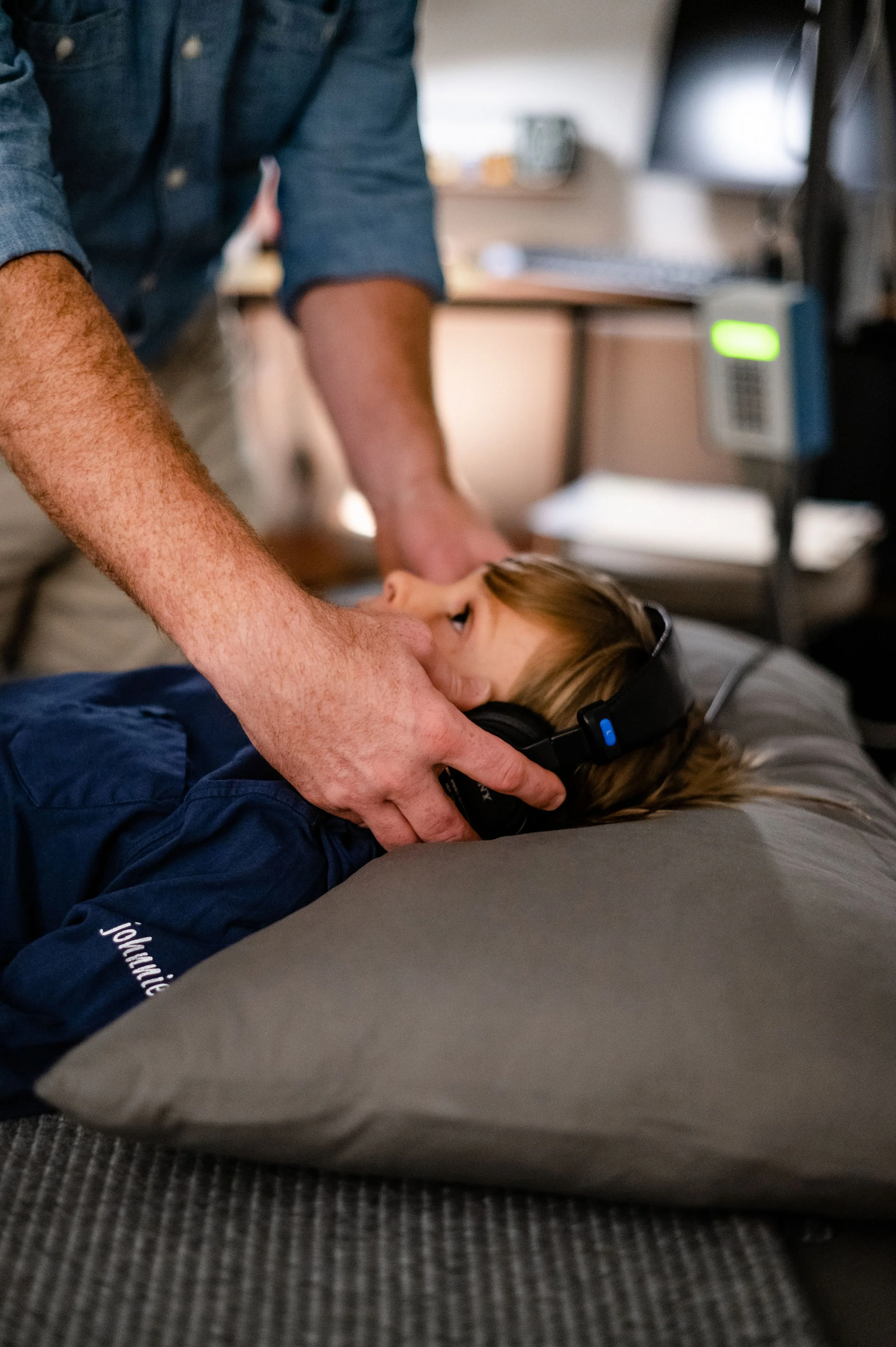
BrainVive's protocol is passive. The participant simply receives the sensory input. No commands to follow. No tasks to complete. No cooperation required beyond showing up.
 No verbal instructions required
- No specific positioning or motor tasks
- Works regardless of communication level
- Works for children and adults across the spectrum
- The brain does what it's designed to do — when given the right input
"We had been told he wasn't a good candidate for therapy because he had a hard time following instructions. BrainVive was the first thing that didn't require anything from him. We couldn't believe how well it worked."
Parent of a child with autism, Atlanta GA
Simple, gentle, passive.
THE NEUROREHAB PROTOCOL™
Our unique 30 day program consists of 12 days in-office followed by an 18 day continuation at home to reinforce and strengthen neural pathways.
01 · Auditory
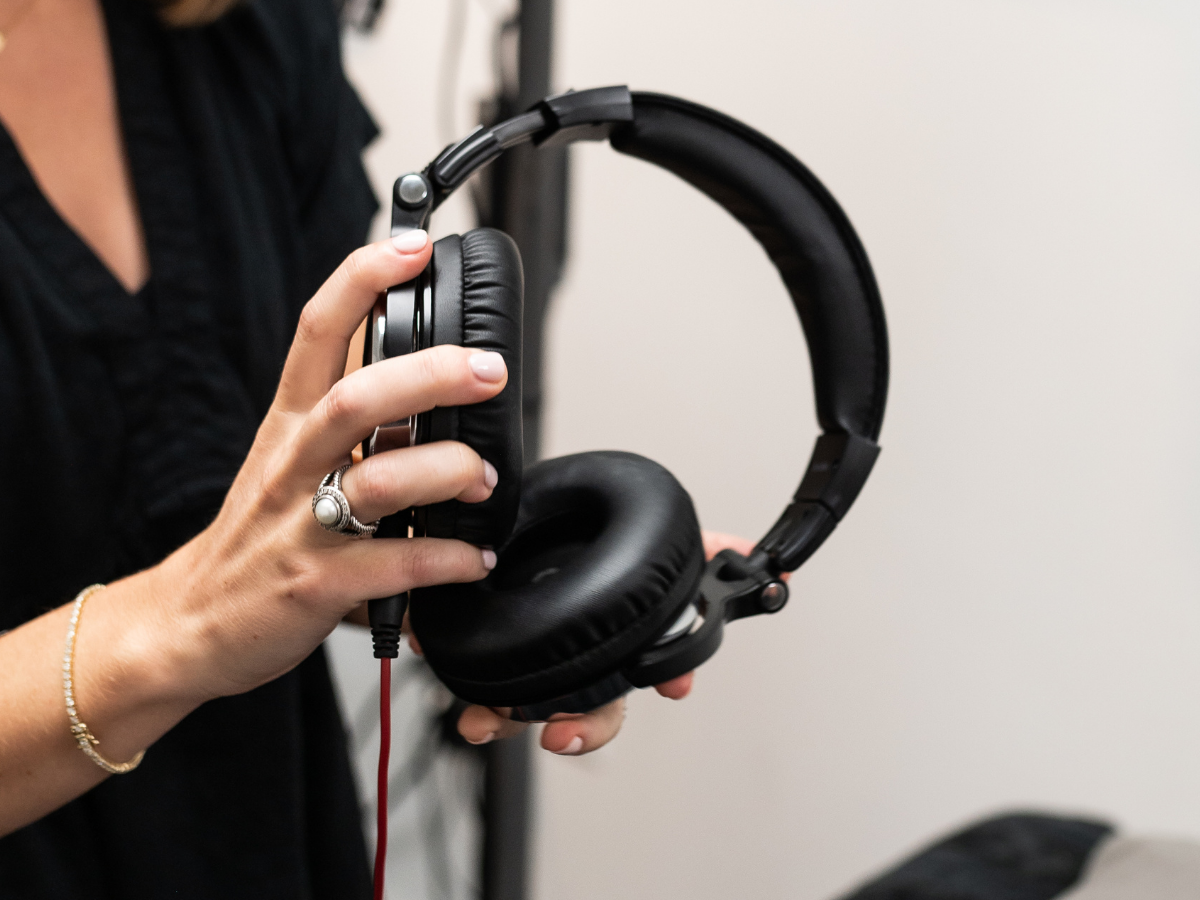
The Headphones
Through headphones, you'll listen to specific sounds and frequencies designed to engage the auditory system. Nothing jarring or unfamiliar — just quiet, structured audio in a calm room.
02 · Vestibular
The Table
You'll lie on a table that moves in slow, gentle, rhythmic patterns. This engages the vestibular system — the part of the brain responsible for balance, body awareness, and how settled the nervous system feels.
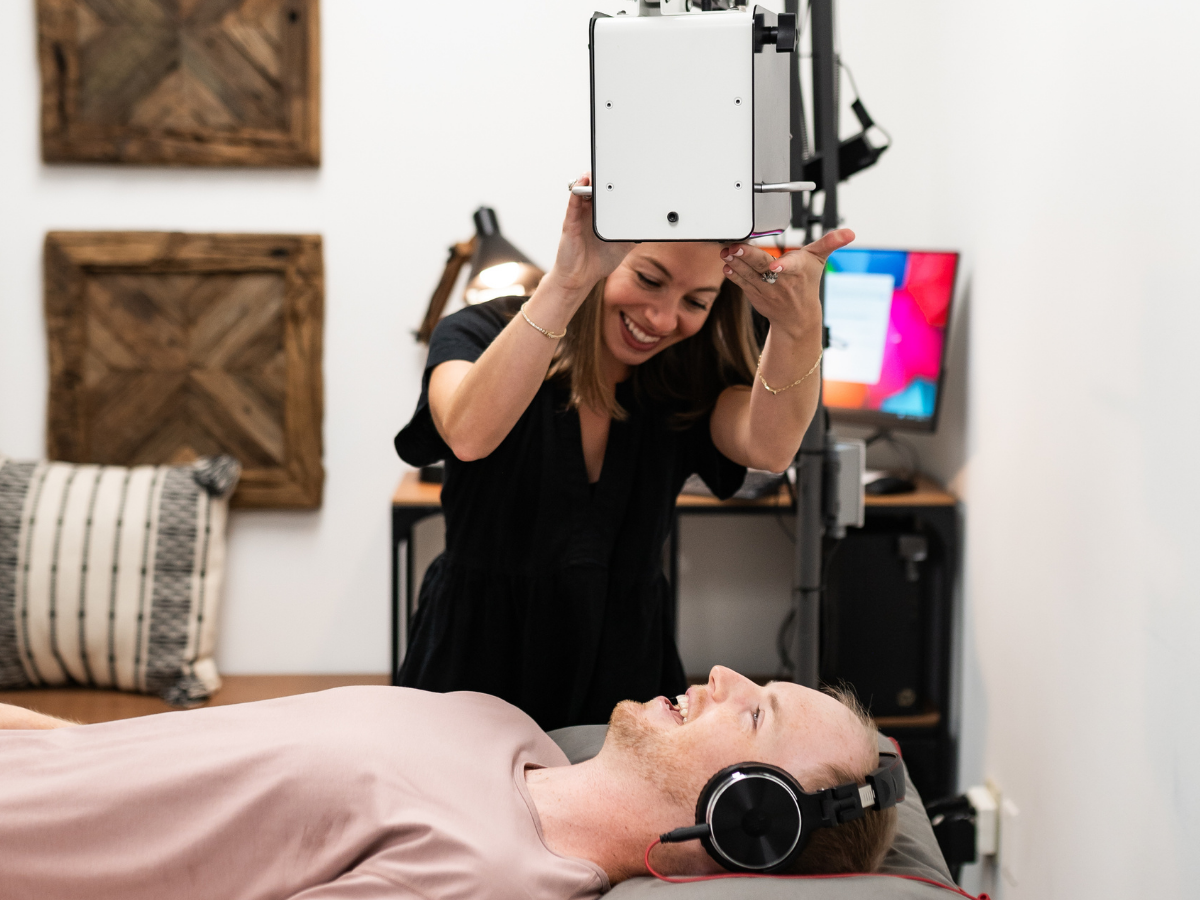
03 · Visual
The Light Box
A lightbox shows a single color for most of the session, occasionally shifting. It's not a light show — no swirling patterns or rapid changes. The simplicity is the point: it gives the visual system something steady and predictable to track.
04 · At Home
Continuing at Home
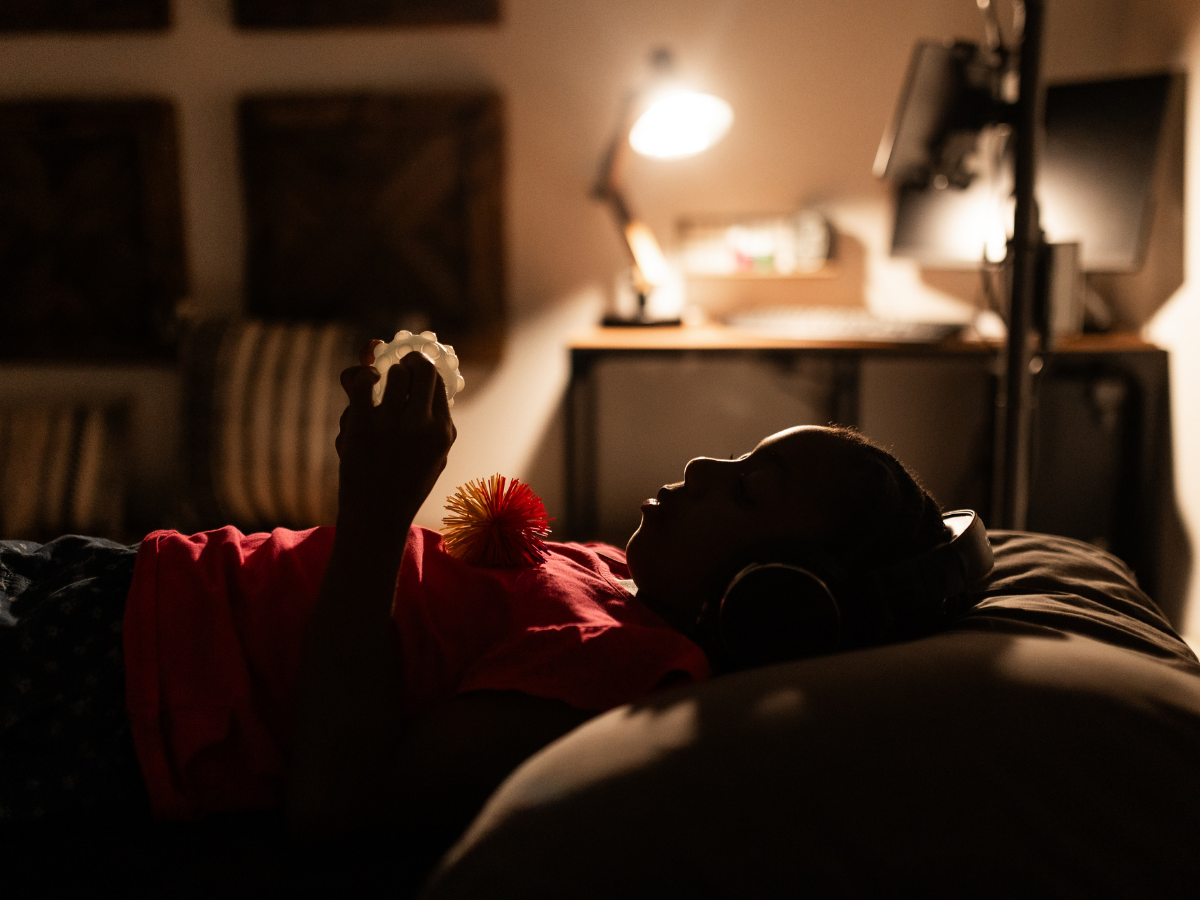
After the 12-day in-office phase, the light portion of the protocol continues at home — two 20-minute sessions a day in a dark room, for 18 days. Simple, structured, and easy to fit into a normal routine.
What most approaches to autism miss
a new way forward
Traditional therapies address behavior and skills. BrainVive works at the source where those behaviors and skill gaps are being created.
ABA Therapy
Teaches desired behaviors through repetition
Applied Behavior Analysis uses reinforcement to shape behavior. It can be effective for specific skill-building, but requires active participation and doesn't address the sensory processing differences that drive many behaviors.
What it misses: the brainstem-level processing that creates the behaviors in the first place
Occupational Therapy
Builds sensory tolerance and life skills
OT helps children and adults manage sensory input and develop functional skills. Valuable, but typically ongoing and focused on coping strategies rather than retraining the underlying sensory systems.
What it misses: direct retraining of the visual, auditory, and vestibular systems simultaneously
Speech Therapy
Develops communication skills directly
Speech therapy targets language and communication at the cortex level. For many people with autism, the underlying auditory processing challenges make this harder than it needs to be.
What it misses: the auditory processing foundation that makes communication possible
Medication
Only manages the symptoms, not the source
Medication can reduce anxiety, improve focus, or manage behavioral challenges. But it addresses the experience of the symptoms only — not the underlying sensory dysregulation that's creating them.
What it misses: it bypasses the root cause of the dysregulation and only attempts to treat the symptoms
What it feels like when the foundation finally shifts.
from our community
Amber M., Walker's Mom
Grace H., Mother of Child with autism

Six ways sensory dysregulation shows up in children with autism
what we work with

What if every sound hits at the same volume — and the brain can't filter what matters?
People with auditory processing differences can't distinguish foreground from background sound. The hum of a fan and someone's voice arrive with equal intensity. This drives sensory overwhelm, meltdowns in noisy environments, and difficulty processing verbal communication — even when hearing is perfect.
What if the visual world is genuinely harder to process than it looks?
Visual processing differences in autism can affect how the brain interprets movement, spatial relationships, and visual detail. This shows up as light sensitivity, difficulty with eye contact, trouble tracking moving objects, and visual overwhelm in busy environments.

What if the nervous system is stuck in a state of constant alert?
The vestibular system is deeply connected to the nervous system's stress response. When it's dysregulated, people struggle with emotional regulation, self-soothing, and the ability to feel grounded and safe. Stimming behaviors are often the nervous system's attempt to regulate itself.

What if the words are there — but the pathway to get them out isn't?
Many people with autism understand far more than they can communicate. Auditory and vestibular processing differences can disrupt the timing, coordination, and sensory integration required for fluid verbal communication — creating a gap between what they know and what they can express.

What if focusing takes so much effort that there's nothing left for learning?
When the sensory systems are working overtime just to process the environment, sustained attention becomes nearly impossible. This isn't a willpower problem — it's a bandwidth problem. The brain is already full before learning begins.

What if meltdowns and shutdowns are the nervous system doing its best?
Emotional dysregulation in autism is often sensory in origin. When the brain can't process incoming input efficiently, the nervous system reaches its limit and responds with fight, flight, or freeze. Retraining the sensory systems creates more capacity — and more regulation naturally follows.
These aren't character traits.
They're symptoms of a sensory system that hasn't had the right input yet.
What families report after the protocol
report a decrease in overall anxiety symptoms
report an increase in auditory processing
report improvement in focus and attention
report a decrease in impulsivity
Based on client self-report data. Individual results vary.
Your child has been trying.
Now try something different.
The Discovery Call is where everything starts. No pressure, no obligation — just a conversation about what's going on and whether BrainVive might be the right fit for your family.